


Santorini Fava: 3,500 Years of Island Food
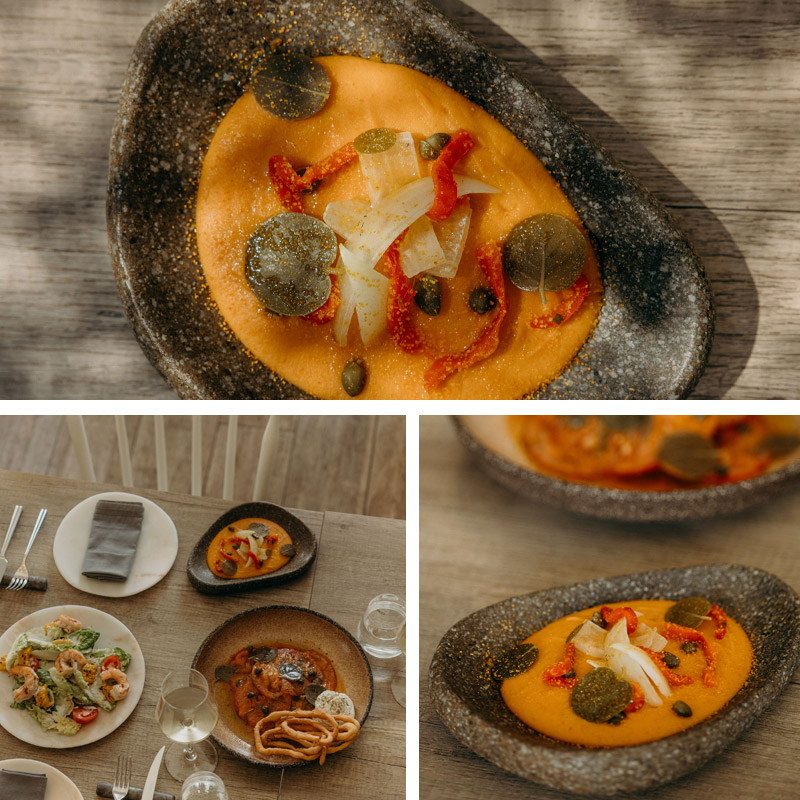
Of all the things Santorini grows in its volcanic soil, fava is the one that surprises people most. It looks like a simple yellow purée, the kind you find on meze tables across Greece, yet the version made here is protected by European law and has been part of island life for thousands of years. It is one of the dishes we point our guests toward in our guide to iconic Santorini dishes, and it deserves a closer look on its own.
What Santorini Fava Actually Is
The first thing to clear up is the name. Fava, almost everywhere else in Greece, means a smooth purée made from yellow split peas. Santorini fava is something else. It comes from the seed of Lathyrus clymenum, a legume in the grass pea family that islanders call lathouri. It is not the broad bean that the word fava suggests in Italian, and it is not a chickpea or a lentil. It is a small, flat, yellow seed that grows in pods, particular to this island and a few neighbouring ones, and the plant has adapted over centuries to a place where almost nothing else will grow.
Three and a Half Thousand Years on the Island
Fava is not a recent tradition here. When archaeologists excavated Akrotiri, the Bronze Age town buried under volcanic ash on the south of the island, they found the very same seeds stored in clay jars, set aside as food more than 3,500 years ago. That makes it one of the oldest continuously cultivated crops in the Aegean. The people who lived on Santorini before the great eruption ate fava, and so does everyone who sits down to a meal here today. Few foods carry that kind of unbroken line.
Why the Volcanic Terroir Matters
The flavour of Santorini fava is tied directly to where it grows. The soil is volcanic ash andpumice, light and mineral and free of clay, and rain is scarce for most of the year. The plants survive on the moisture in the night air rather than on watering, and that hard, dry life is exactly what concentrates the seed. When it cooks, the result is a purée that turns soft and almost buttery, with a natural sweetness and a clean, earthy depth that fava grown on richer mainland soil simply does not have. The same volcanic ground that gives the island its cherry tomatoes and white eggplant is what makes the fava taste of this place and nowhere else.
What PDO Protection Means
Santorini fava carries Protected Designation of Origin status from the European Union, the same kind of legal protection held by Champagne or Parmigiano Reggiano. In practice it means the name Fava Santorinis can only be used for the genuine article grown on the island, under defined methods, and not for split peas dyed yellow and sold under the same word elsewhere. You can read the official record of that protection on the European Union’s register. For a visitor, the label is a simple promise: what reaches your plate is the real thing, with the terroir and the history behind it.
How It Is Made, the Traditional Way
The method is honest and unhurried. The dried seeds are simmered slowly with water, a little onion and olive oil, and stirred as they break down into a soft cream. No blender is strictly needed, good fava comes apart on its own with time and patience. It is served warm, spread across a shallow plate, and finished the old way with raw onion, capers, a generous pour of good olive oil and a squeeze of lemon. Some cooks add a scattering of caper leaves or a handful of herbs. Producers and cooperatives such as Santo Wines still mill and prepare it much as families always have. If you want to see the traditional preparation in detail, the Greek Gastronomy Guide keeps a faithful record.
How to Eat It, and What to Pair
Fava is at its best as a meze, somewhere near the start of a meal, scooped up with bread alongside other small plates. The classic pairing is fava with sweet caramelised onions softened slowly in olive oil, the sweetness playing against the earthiness of the purée. It also sits beautifully under grilled vegetables, beside a piece of fresh fish, or simply on its own with capers and lemon. Because it is built entirely from a legume, olive oil and lemon, it is naturally vegan, which is why it has a permanent place among our plant-based plates. A cold glass of Assyrtiko alongside is the local way to round it off.
Where to Try Fava in Oia
There is a real difference between fava made from a packet and fava made with island seed, cooked slowly and dressed with care. At Oia Gefsis we serve ours the traditional way, warm and generous, as part of a menu rooted in Santorinian cooking. You will find it among the starters on our menu, and the best way to taste it the way it is meant to be is at a table on the terrace as the afternoon softens into evening. When you are ready, book a table with us in Oia, and start your meal the way the island has for thousands of years.