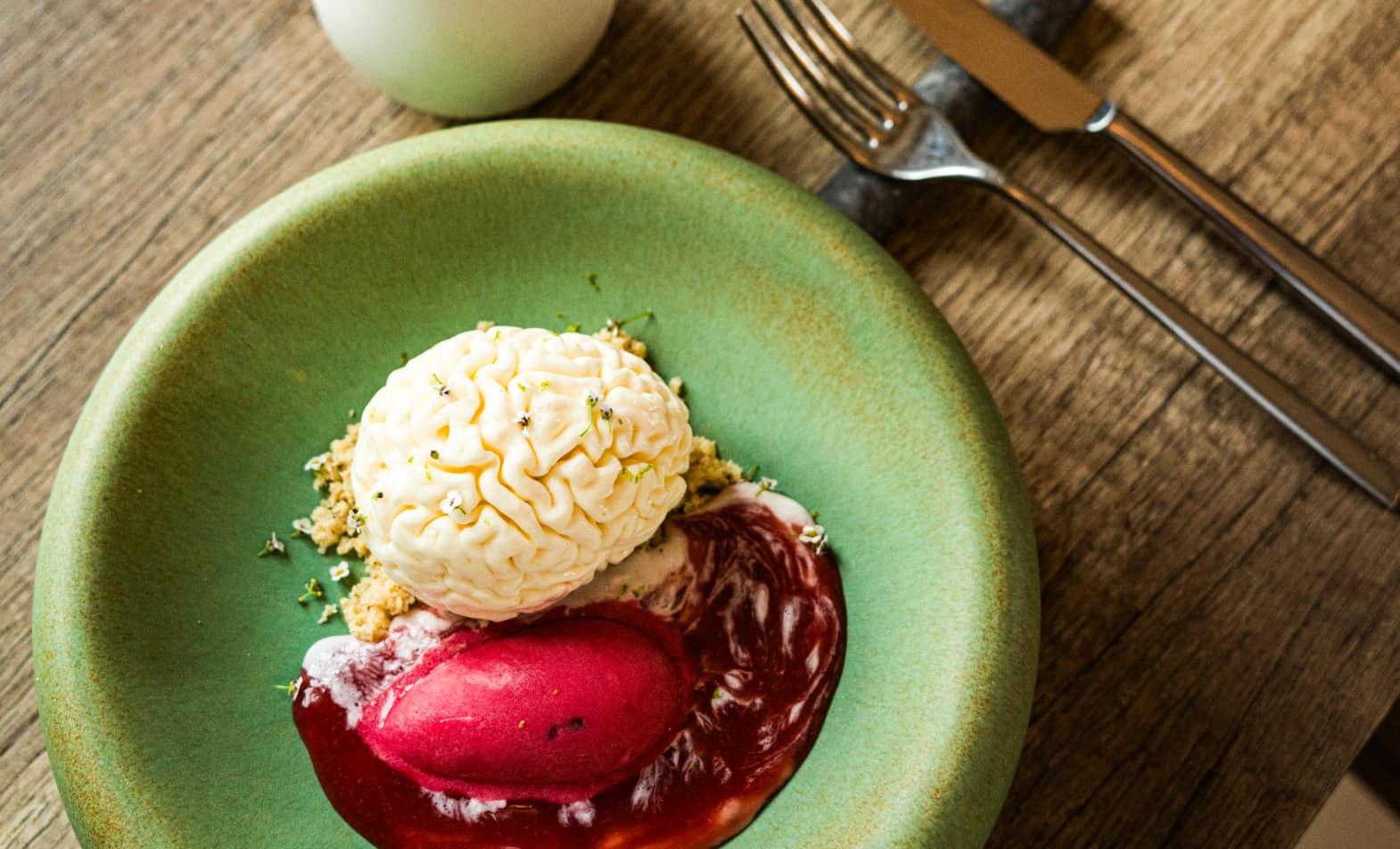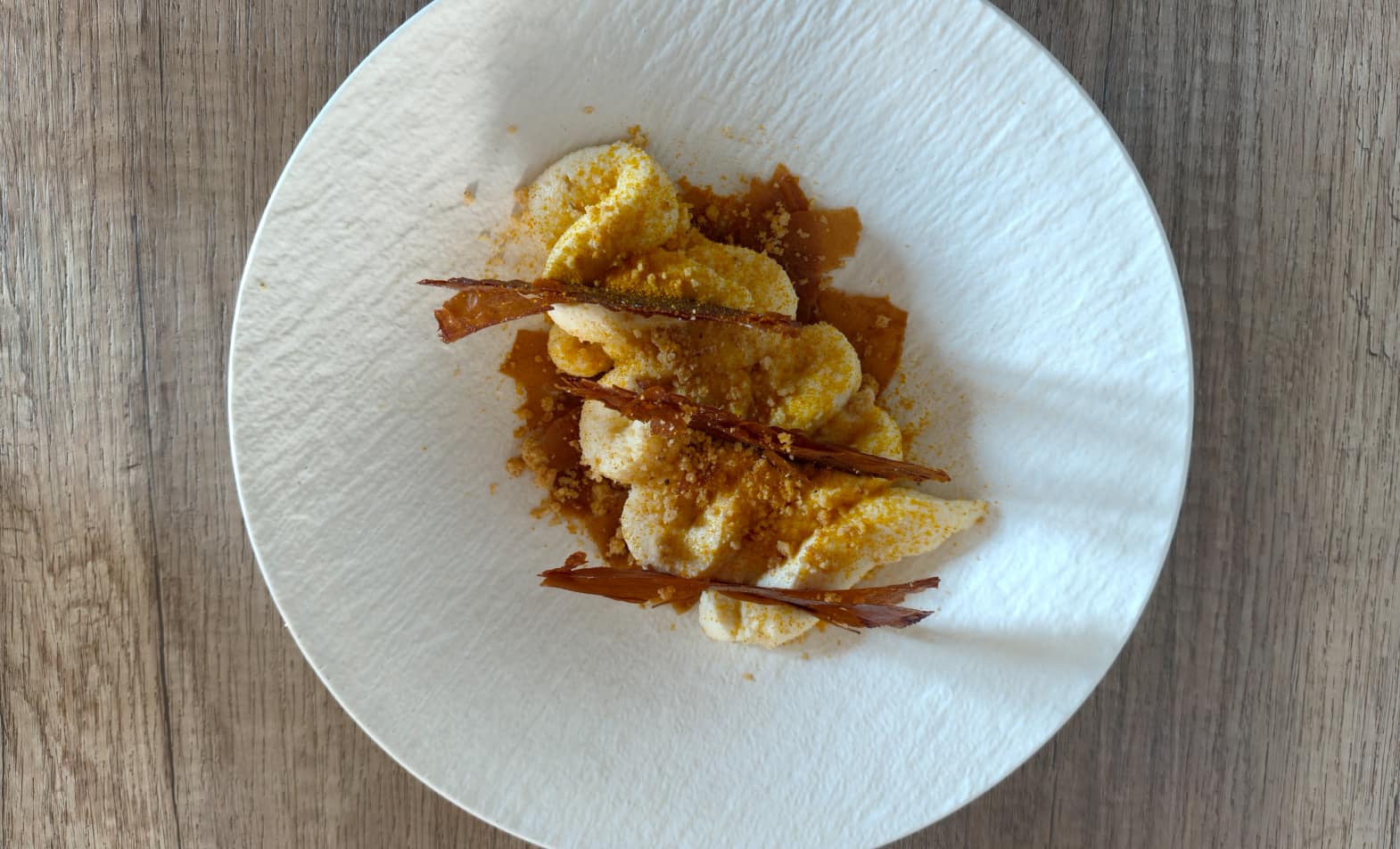

There’s a particular moment at the end of dinner in Oia, when the caldera has gone dark and the last of the wine is sitting warm in your glass, where a dessert can either be an afterthought or the part of the evening you’ll still be talking about on the plane home. At Oia Gefsis, we’ve spent years making sure it’s the second one.
Desserts in Santorini carry a weight that goes beyond sugar and flour. The island has its own sweet traditions — some tied to monasteries and Easter tables, some to grandmothers’ kitchens, some to the volcanic soil that grows fruit you won’t find tasting quite the same anywhere else. Our dessert menu sits at the intersection of those traditions and modern pastry technique, and that intersection is where things get interesting.
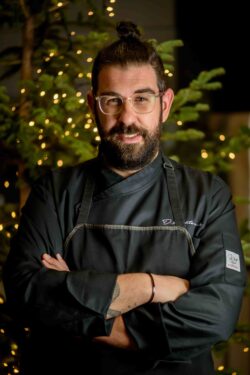
Meet the Pastry Chef Behind the Menu
Dimitris Karatzaferis was born in Patras and trained in the culinary arts in Athens. His path through professional kitchens eventually led him toward pâtisserie and bakery work, and for the summer of 2026 he built an entirely new dessert menu for Oia Gefsis from the ground up.
His philosophy is worth explaining, because it shapes every plate that leaves our pass. He approaches desserts as a fine-dining discipline rooted in Greek flavors and childhood memory. The fruit jellies a mother used to make. The rice pudding a grandmother cooked slowly in a wood stove. Those memories arrive at the table in 2026 with a refined visual composition — but the flavors stay honest. Nothing on the plate tastes like a riddle. You know what you’re eating, and then you taste how carefully it was made. You can see more of Dimitris’s work on his Instagram, cooking.skull, where the plating and thinking behind each creation are documented plate by plate.
// OUR DESSERTS (MENU)
Daily
Each of these has been designed specifically for our kitchen, the ingredients we source locally, and the kind of evening a guest has here, long, unhurried, with the view doing half the work. You’ll find the wine pairing our sommelier most often suggests at the table.
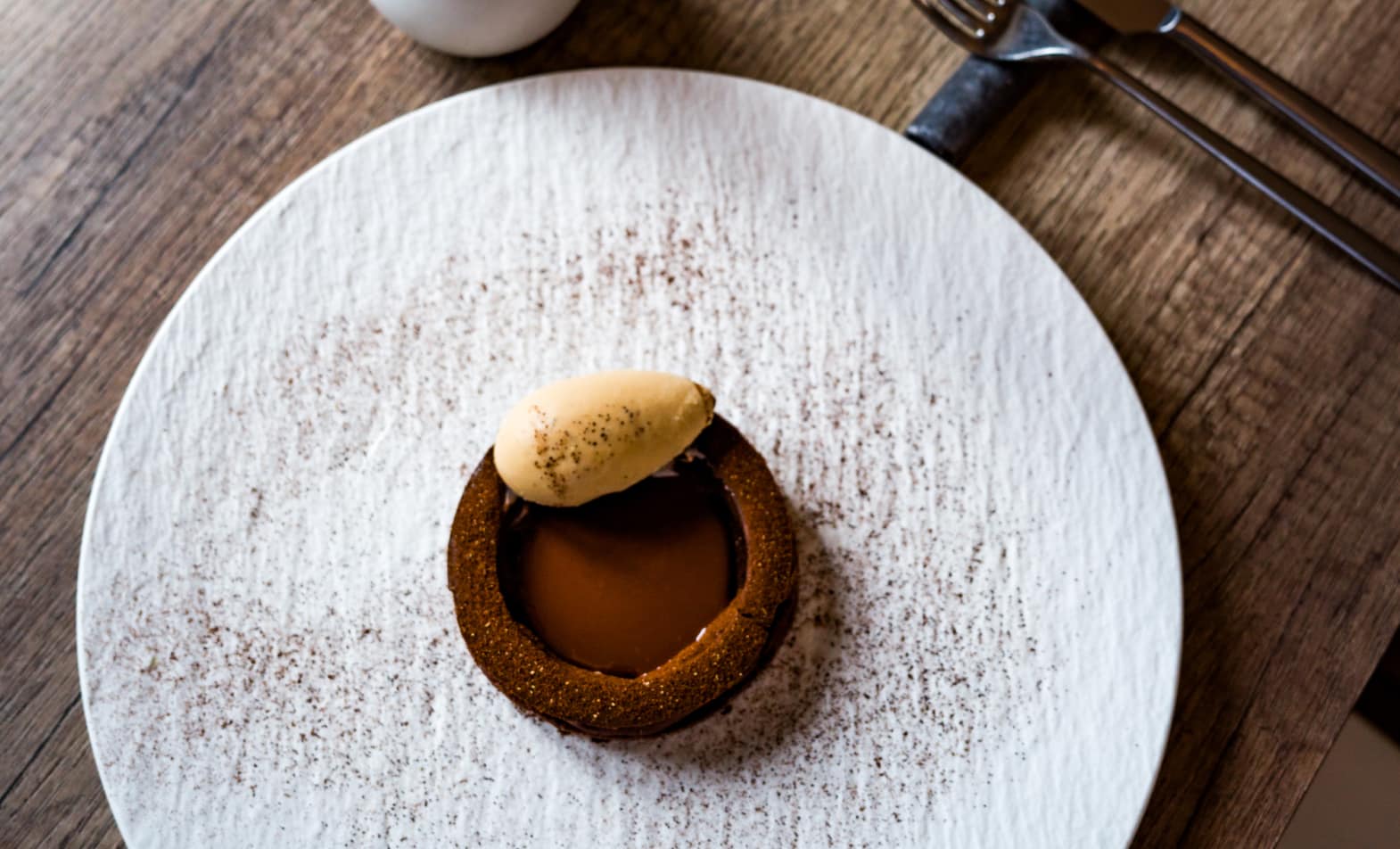
A dessert that plays sweet against savoury. Chocolate sits at the centre, while a miso caramel foam brings a salted, almost umami depth that keeps the sweetness in check. A cremeux of exotic fruit lifts it with brightness, the rhum crumble adds a warm, boozy crunch, and a peach sorbet closes things on a cool, fruit-led note. One for guests who like a little tension in their chocolate.
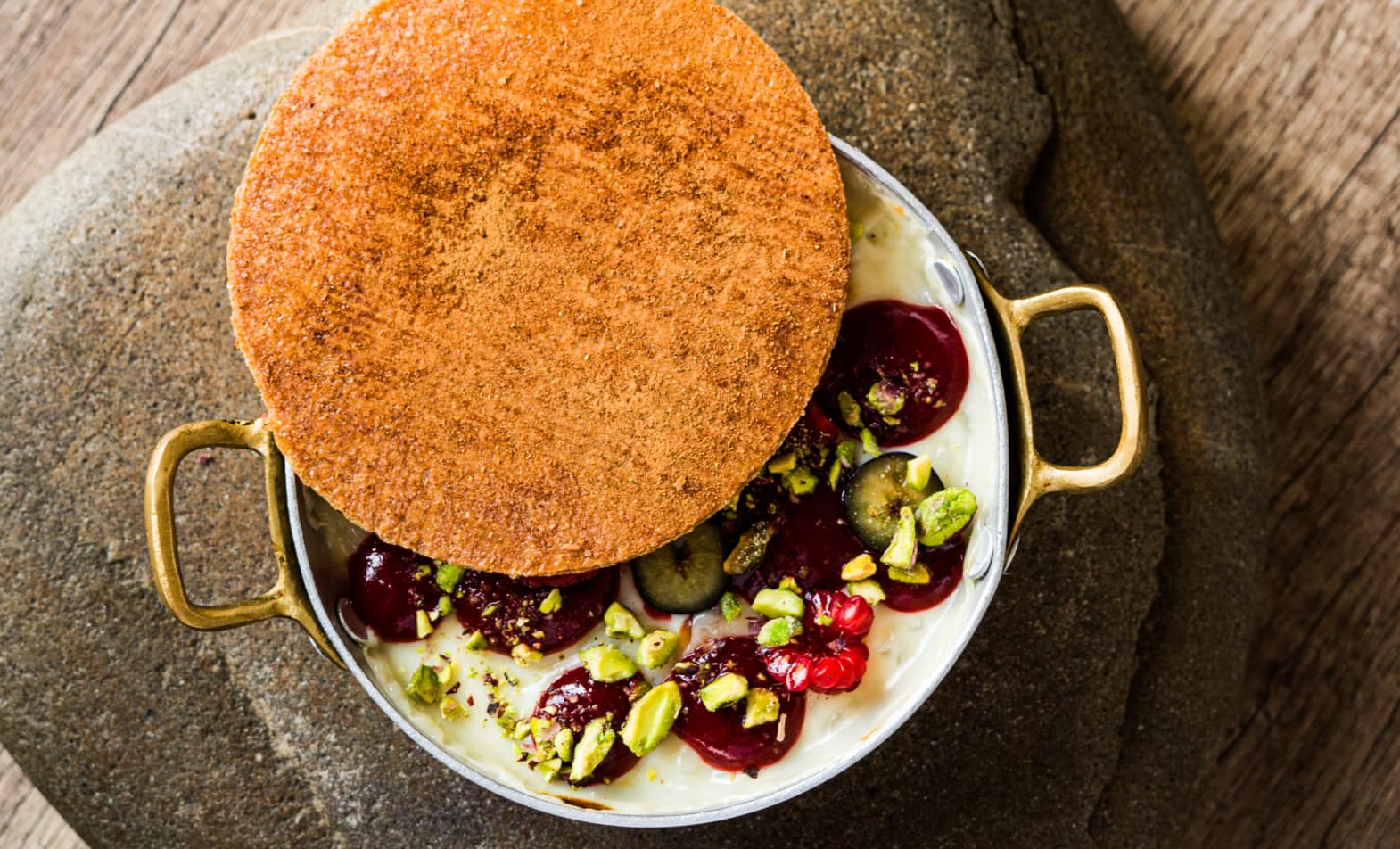
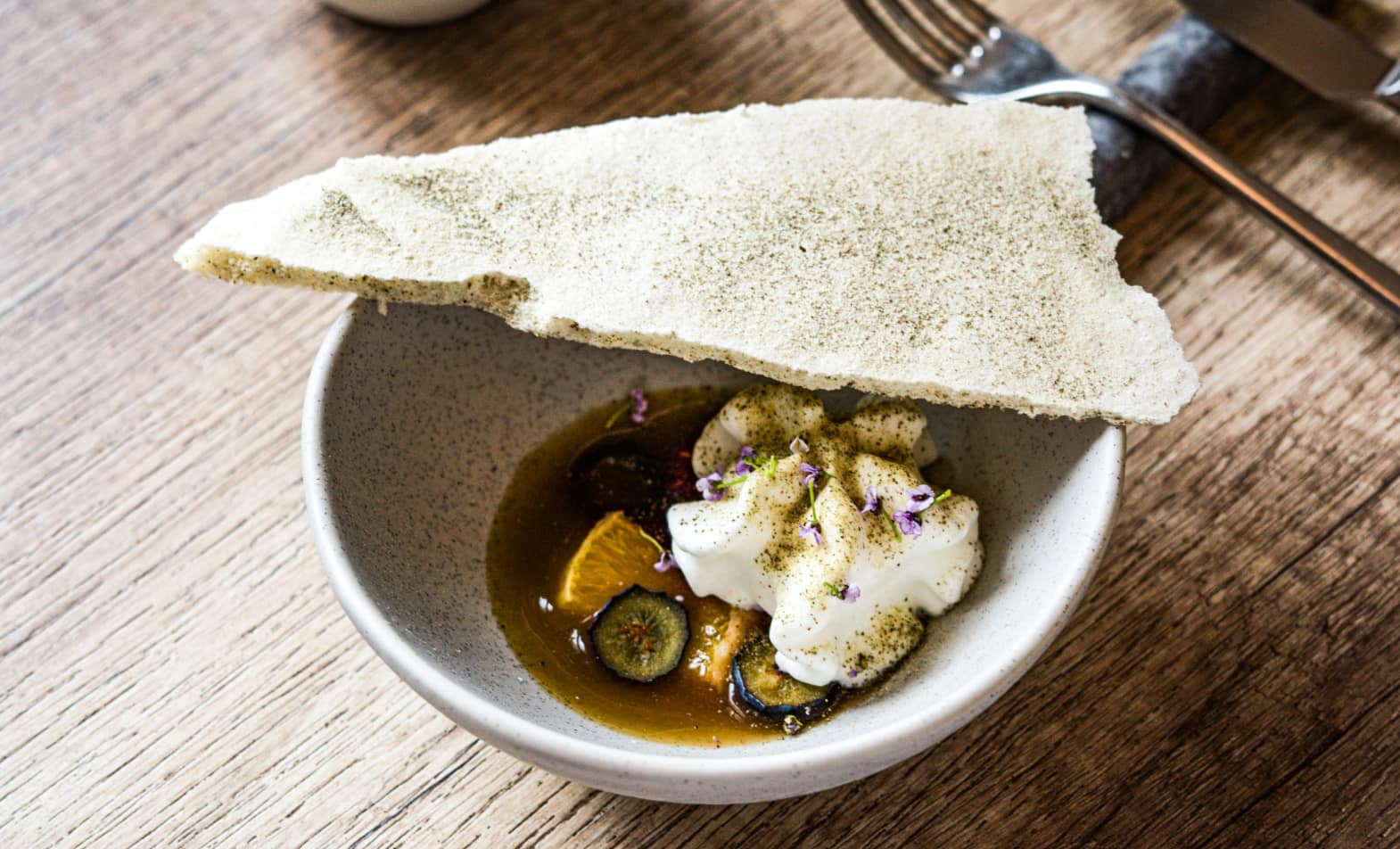
A tribute to traditional Greek rizogalo, slow-cooked in our wood oven for a deeper, richer flavor than any stovetop version can produce. Served with red fruits, raspberry gel, and crispy phyllo for a modern finish on a dish that most of our Greek guests remember from their own grandmothers’ kitchens. This is the dessert that tends to get the quietest reaction at the table — the kind where everyone stops talking for a minute.
Suggested wine pairing: Vinsanto Karamolegos 2010, unambiguously. Its dried-fruit character mirrors the wood oven’s slow caramelization of the milk sugars in a way that feels engineered for this exact pairing.
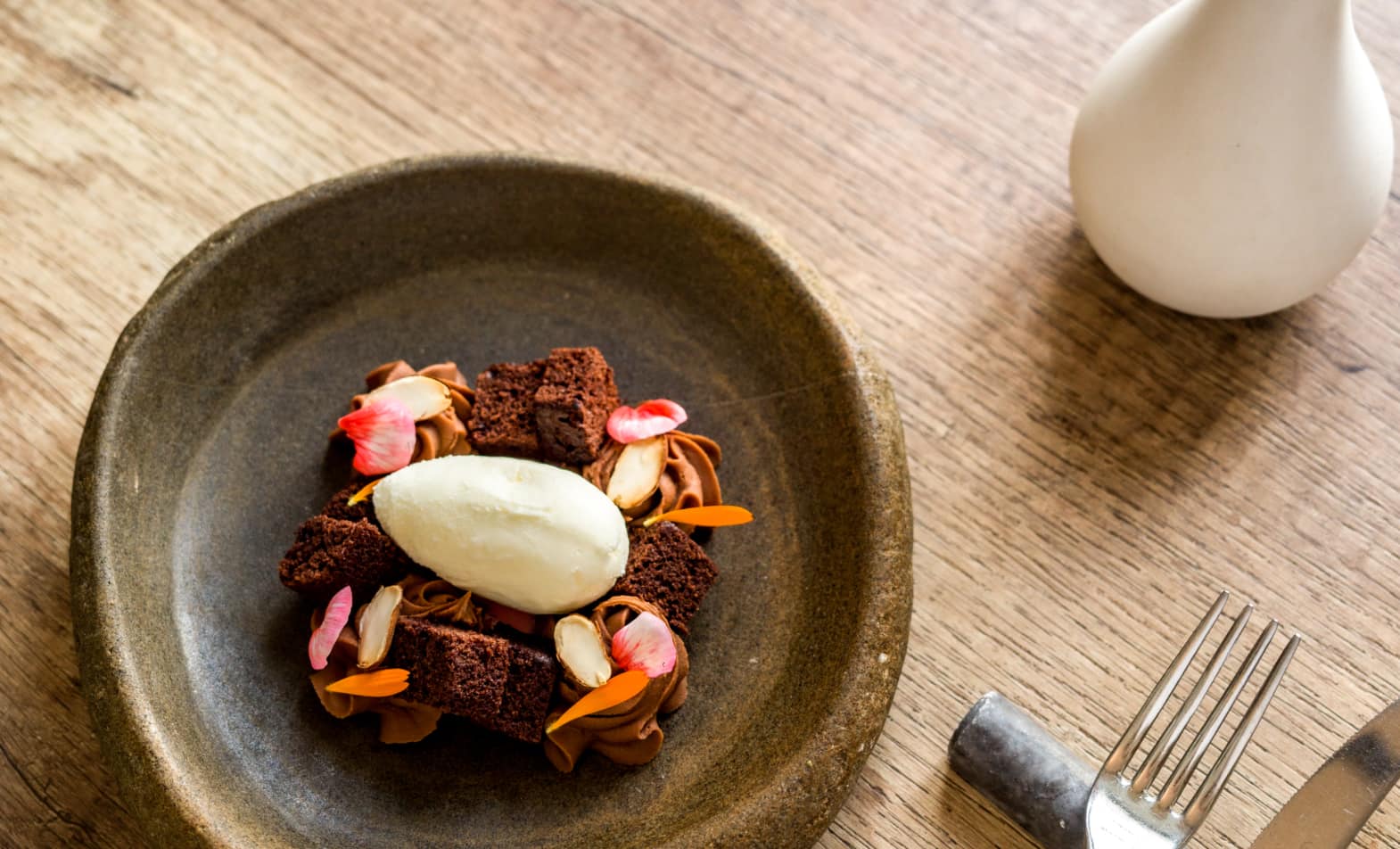
The boldest plate on the list, built around black truffle in two forms, worked through the dessert and churned into its own ice cream. Its earthy, savoury character meets a deep chocolate sauce and almond in two textures, caramelised and baked into a crisp biscuit, with a rhum crumble for spice and crunch. Rich, unusual, savoury and sweet at the same time. For the diner who wants something they have not had before.
Tsoureki, the braided sweet bread every Greek family knows from the Easter table, reworked as a plated dessert. Handmade brioche meets Aegina pistachio in two forms, a crunchy praline and a silky caramel, served with pistachio ice cream. A pinch of fleur de sel and a thread of extra virgin olive oil sharpen the nutty sweetness and keep it firmly Greek.
Best Traditional Santorini Desserts to Try
Before the modern plated desserts became part of our menu, the sweets of Santorini existed in their own quiet world. Some of them still do, and they deserve more attention than the guidebooks usually give them. These are the foundational references our kitchen draws on — the flavors and techniques that anchor everything else on the dessert card.
Melitinia are the signature sweet of Santorini. The name comes from the ancient Greek word melitero, meaning “sweet as honey.” They are small open-faced cheese pastries filled with fresh mizithra, flavored with Chios mastic — a PDO-protected resin recognized by UNESCO as part of the world’s intangible cultural heritage — and a touch of cinnamon, traditionally baked on Holy Tuesday for the Easter table. They are made almost exclusively on this island — you won’t find them done properly anywhere else in Greece. The best versions are still homemade in the villages inland from Oia, where the older women work in teams and the one who can pinch the most pleats into the dough is quietly understood to be the best baker at the table.
Sun-dried figs with walnuts are another old Santorini custom. The figs are dried on rooftops across the island during late summer, concentrating their sugars into something closer to candy than fruit. Served with walnuts and a drizzle of aged Vinsanto, they’re the kind of dessert that existed long before restaurants had dessert menus — just a plate put out at the end of a meal in someone’s home.
Galaktoboureko and baklava need less introduction. What changes here is the honey. Our versions lean on thyme honey from a beekeeper in Pyrgos, whose hives sit among the wild herbs that grow on the island’s southern slopes. The aroma is different from supermarket honey in a way that’s immediately obvious on the first bite.
Loukoumades — small honey doughnuts finished with thyme honey and sesame — and karydopita, the Greek walnut cake soaked in syrup, round out the core repertoire of sweets rooted in this part of the Mediterranean.
Spoon sweets (glyka tou koutaliou) deserve a mention of their own. These preserved fruits in light syrup — fig, sour cherry, bitter orange, quince — are the traditional Greek gesture of hospitality, often offered to guests upon arrival or served at the end of a meal with a small glass of cold water. At home on Santorini, a jar of fig spoon sweet sits in almost every kitchen cupboard. On our dessert plates, they occasionally appear as a finishing element rather than a star, which is exactly how they’re meant to be used.
Chlorotyri, Santorini’s fresh goat and sheep milk cheese, is the quiet link between our savory and sweet kitchens. Produced in small quantities by a handful of island cheesemakers, it carries a creamy-sour character that works beautifully drizzled with thyme honey and served at the close of a meal — a Santorini take on the cheese-and-honey tradition that runs through the whole Mediterranean.
Where Our Ingredients Come From
A dessert is only as good as what goes into it, and on Santorini that principle matters more than usual. The island grows ingredients — cherry tomatoes, fava, capers, grapes, figs — that taste distinctly different from anywhere else because of the volcanic soil and the lack of rainfall. We use that advantage whenever the menu allows.
• Thyme honey from local beekeepers, used across the traditional sweets and several of the plated desserts
• Sun-dried figs from processed on Santorini rooftops the traditional way during the late summer harvest
• Fresh mizithra from local producers — Cycladic dairy producer for the melitinia
• Chios mastic for the traditional sweets that call for it — there is no acceptable substitute
• Seasonal fruit from local Santorini farmer/farmers which is why the fruit plate changes through the season
• Walnuts from mainland Greek producers, because Santorini’s climate doesn’t favor walnut trees — some things have to travel
Almost everything that can be made in house, is. The ganaches, crémeux, meringues, phyllo work, and gels are produced daily in our pastry kitchen. It’s more work than ordering finished components, but it’s the only way the plates taste the way Dimitris wants them to taste.
Finishing the Evening Properly
A good dessert ending isn’t just about what’s on the plate. It’s about timing — giving the main course room to settle, letting the last light of the sunset do its work across the caldera, and arriving at something sweet when you’re actually ready for it rather than rushing toward it. If you’re planning an evening with us, it’s worth thinking about dessert as part of the whole arc: a starter and main from the menu, a glass of Assyrtiko or a light red through dinner, and then a dessert course with a small pour of aged Vinsanto to close things out. That’s the full Santorini experience, and it’s how the island itself invites you to eat.
If you’re curious what comes before the last course, the rest of the kitchen lives here.
Reserve Your Table
Dessert at Oia Gefsis tends to be the part of the meal guests remember longest, which is both flattering and accurate. If you’d like to book a table — dinner, dessert course, wine pairing, the whole evening — you can make a reservation here. Bring someone who’ll slow down for the last course. That’s when the good part happens.